


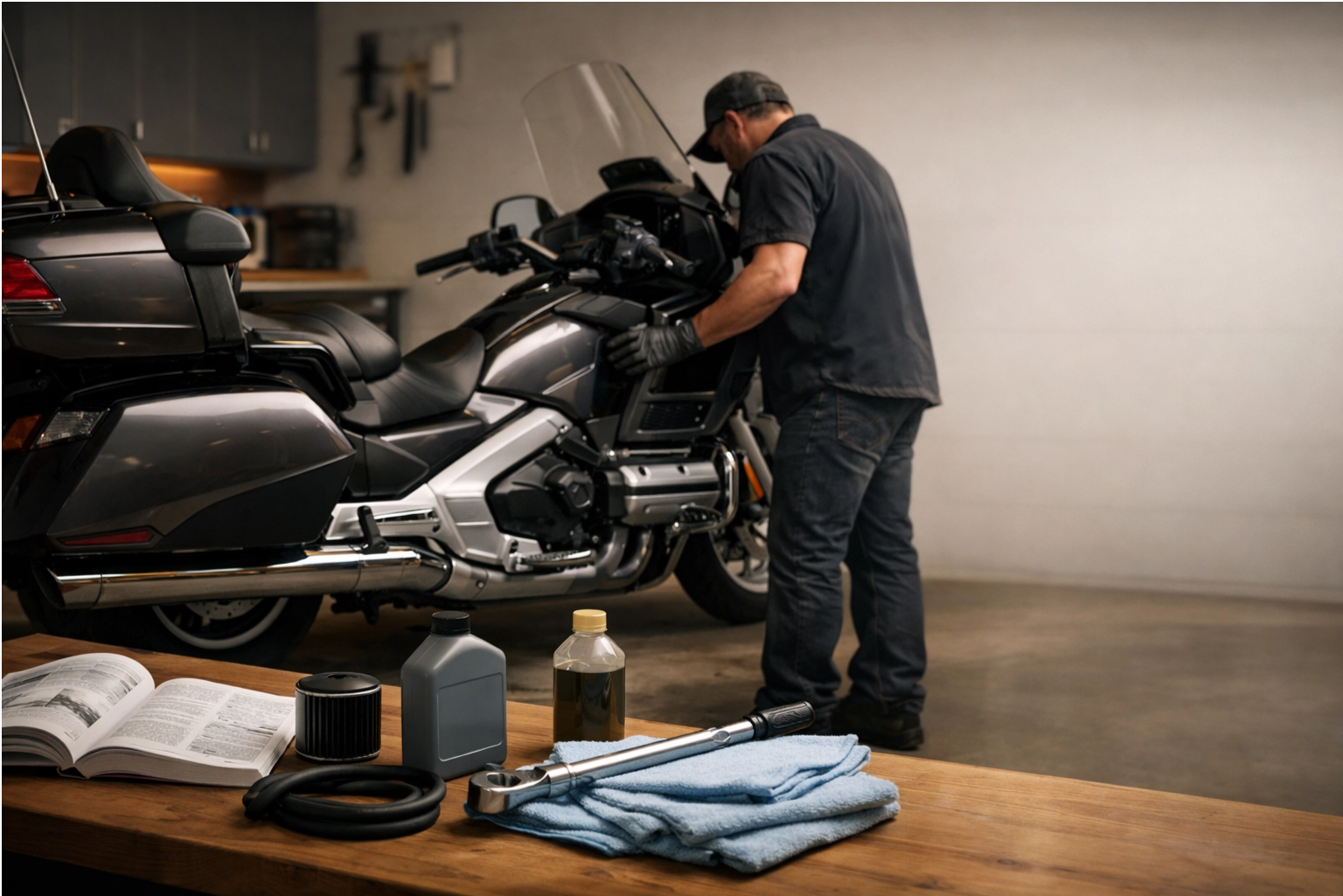
Any experienced rider understands that a properly cared-for touring motorcycle is not just a machine. It is a faithful friend that will accompany you on many miles of adventure.
Over several decades, I’ve seen how proper maintenance can turn these engineering marvels into lifetime investments. If you own a Honda Goldwing or any other touring bike, knowing which maintenance items truly make a difference is the key to keeping your motorcycle reliable for years, instead of watching it wear out in just a couple of seasons.
Understanding the Basics of Motorcycle Longevity
The key to ensuring that your touring motorcycle lasts a long time is to understand that prevention is far more cost effective than repair.
Quality Goldwing-compatible parts are the foundation of this preventive strategy. They protect your investment and help maintain strong performance mile after mile. Touring motorcycles are not built like ordinary commuter bikes. They face long trip durations, changing weather conditions, and heavy weight loads, which makes the choice of parts especially important.
Most riders are not aware that genuine touring-focused maintenance parts are engineered with tolerances designed to handle the unique strains these bikes experience. Cheaper alternatives may seem cost effective at first, but they often fail faster on long-distance use. Over time, that can become more expensive due to repeated replacements and potential damage to connected systems.
There are several important maintenance areas that can extend the life of your Goldwing.
Engine and Fluid System Essentials
The longevity process starts with the internal health of your engine.
High-performance oil filters are one of the most economical ways to increase the life of your Goldwing’s engine. These filters capture microscopic impurities that cause rapid wear in precision-machined parts. Using quality filters along with manufacturer-recommended synthetic oils provides a protective layer that helps keep moving component clearances stable across very high mileage.
Coolant system maintenance matters just as much.
Radiator hoses, thermostats, and coolant degrade over time as rubber compounds become brittle and lose flexibility. Replacing these components on time prevents overheating, which can lead to cylinder head distortion or gasket failure. Those repairs can cost thousands of dollars, while preventive coolant system parts are relatively low cost.
Protecting the Transmission and Final Drive
The transmission and final drive of your Goldwing are unique systems that demand special attention.
Your shaft drive system depends heavily on proper fluid maintenance. Changing the oil with OEM-specification lubricants protects gears and ensures smooth power delivery to the rear wheel. Shaft drives can last well over two hundred thousand miles with very little wear, but that longevity depends on staying consistent with fluid change intervals and using the correct parts.
Clutch components also need attention, especially in manual transmission models.
Replacing clutch plates and springs at the right time keeps engagement smooth and prevents slipping. Slipping generates heat and causes accelerated wear throughout the drivetrain. If you notice any changes in clutch engagement, replacing high-quality clutch components early helps preserve drivetrain integrity and ride comfort.
Suspension and Steering Components for Smooth, Stable Touring
Suspension and steering components are often overlooked, but they matter for both safety and long-term durability.
Fork seals are a perfect example. Leaky fork seals allow dirt to enter and damping oil to escape, which speeds up wear in bushings and sliders. Replacing fork seals every few years is a small cost compared to the major rebuilds that can result from long-term neglect.
Steering head bearings also require regular attention.
Constant loading and vibration can create detents that reduce handling precision. Installing high-quality tapered roller bearings during servicing helps maintain smooth steering response and reduces stress on the frame caused by sticking or loose bearings.
Electrical System Maintenance and Touring Reliability
Modern touring motorcycles depend on advanced electrical systems that power everything from fuel injection to navigation displays.
Over time, battery posts, cable connections, and fuse block terminals can corrode. This creates electrical resistance, puts strain on the charging system, and shortens component life. Applying dielectric grease and replacing corroded terminals is simple maintenance that prevents expensive electrical failures.
The alternator or stator is the foundation of your charging system.
Checking charging output helps identify problems early, before a total failure happens. Carrying spare voltage regulator parts can be a smart touring precaution, because electrical issues often appear when you are far from help.
Brake System Maintenance for Safety and Long Service Life
Brake system maintenance is about safety, but it also protects expensive components.
Over time, brake fluid absorbs moisture. This lowers the boiling point and can cause corrosion in master cylinders and calipers. Flushing the brake system at least every two years with fresh DOT4 fluid helps prevent wear that can lead to costly repairs.
Brake pads matter as well.
Touring-grade brake pads provide more consistent stopping power and typically produce less rotor wear than cheaper pads. Good braking performance reduces strain on the entire system, especially on long downhill runs or during heavy-load touring.
Building a Maintenance Strategy That Actually Works
A maintenance plan that matches your riding habits makes it easier to avoid missed service items.
Distance-based intervals work well for riders who cover high mileage each year. Calendar-based intervals are also important, especially for riders who tour only a few times per year. Keeping records, including receipts and service notes, builds valuable documentation. This helps you track part life cycles and can increase resale value because buyers trust motorcycles with maintenance history.
It also helps to build relationships with experienced parts suppliers.
Good suppliers understand touring motorcycle demands and can recommend the right components for your specific model. They often know common failure points and can help you solve problems before they happen, instead of after the damage is done.
Final Thoughts
The idea is simple. If you invest in the right Goldwing service parts and follow the GoldWing maintenance parts, your touring motorcycle becomes a dependable companion that can deliver decades of memorable travel.
The steady investment in quality parts and preventive care pays back through reliability, smoother performance, and preserved value, keeping your motorcycle ready whenever the road calls you again.
Goldwing Maintenance Frequently Asked Questions
Are OEM parts really worth the higher cost compared to aftermarket parts?
Many aftermarket manufacturers do produce strong components, but OEM parts match Honda’s engineering tolerances and specifications. They remove compatibility concerns and provide more confidence in long-term fit and function.
What if I ride only a small number of miles each year?
Even motorcycles that are not ridden much still need maintenance. Seals can dry out, fluids can degrade chemically, and corrosion can form regardless of odometer reading. Bikes that sit between trips often require calendar-based maintenance, not just mileage-based checks.
When should I switch from stock maintenance parts to performance parts?
Stock specifications usually provide the best balance of dependability, long service life, and long-term value. Performance modifications can sometimes reduce durability in exchange for gains that most touring riders do not truly need.
