


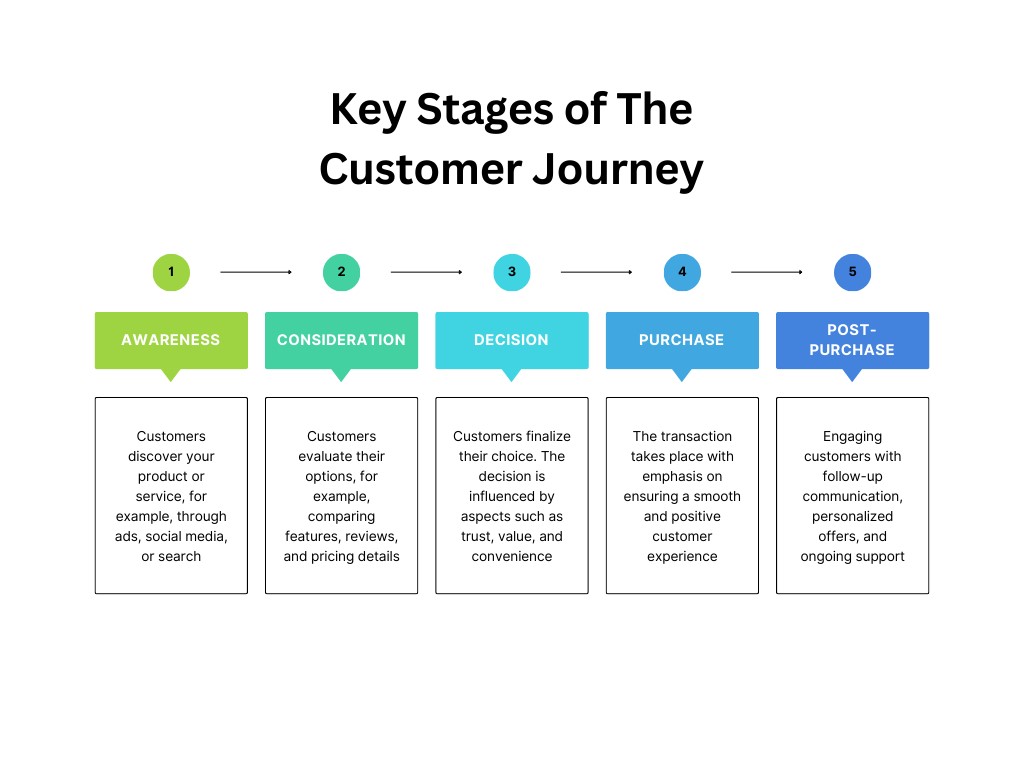
In today’s competitive business landscape, understanding your customers’ interactions with your brand is crucial. Customer journey tracking allows businesses to see how prospects move from awareness to conversion, providing insights to optimize marketing, sales, and customer experience strategies. Here’s a comprehensive, step-by-step guide to tracking customer journeys effectively.
1. Define Your Goals and Objectives
Before diving into customer journey tracking, it’s essential to outline your goals. Are you trying to improve lead conversion, boost customer retention, or enhance overall user experience? Clearly defined objectives help determine which metrics to monitor and ensure that your tracking efforts align with broader business strategies.
2. Identify Key Customer Touchpoints
A customer journey spans multiple touchpoints, both online and offline. These may include website visits, social media interactions, email campaigns, customer service inquiries, and in-store experiences. Mapping all potential touchpoints ensures that no stage of the customer journey goes unmonitored.
3. Build Customer Personas
Creating detailed customer personas helps you understand the behaviors, needs, and pain points of different audience segments. Personas provide context to your customer journey tracking efforts, enabling personalized messaging and targeted marketing strategies.
4. Choose the Right Tracking Tools
Effective tracking relies on technology. Popular tools for customer journey tracking include web analytics platforms, CRM software, heatmaps, and marketing automation systems. Selecting the right tools depends on your objectives, budget, and the complexity of your customer interactions.
5. Implement Data Collection Methods
Gathering accurate data is critical. Track user behavior through website analytics, form submissions, email engagement metrics, social media interactions, and customer support logs. Ensure that data collection respects privacy laws and provides a clear picture of the customer experience.
6. Map the Customer Journey
With data in hand, create a visual representation of the customer journey. Start from initial awareness, move through consideration, purchase, and post-purchase stages. Mapping the journey helps identify friction points and opportunities for improvement.
7. Analyze Patterns and Insights
Once the journey is mapped, analyze patterns. Are there stages where customers drop off? Which touchpoints drive the most conversions? Insightful analysis enables businesses to make informed decisions, such as optimizing website navigation, improving messaging, or enhancing customer support.
8. Test, Optimize, and Iterate
Customer journey tracking is not a one-time task. Continuously test different strategies, monitor changes in behavior, and refine your approach. Regular iteration ensures your customer journey remains aligned with evolving customer expectations.
9. Integrate Across Departments
Customer experience is a shared responsibility. Ensure marketing, sales, customer support, and product teams collaborate using insights from journey tracking. Unified efforts improve consistency across touchpoints and enhance overall customer satisfaction.
10. Measure ROI and Success
Finally, evaluate the impact of your tracking efforts. Measure improvements in conversion rates, customer retention, and engagement. Demonstrating ROI reinforces the value of customer journey tracking and informs future strategies.
Conclusion
Mastering customer journey tracking is about understanding your customers’ experiences at every stage. By defining objectives, mapping touchpoints, leveraging technology, and continuously optimizing, businesses can enhance satisfaction, drive conversions, and build long-lasting relationships.
