


Ask anyone who has done the Inca Jungle Premium 4 Days / 3 Nights what their favorite part was, and you will get a different answer every time. Some people say it was the bike ride on day one, when the Andes dropped away beneath them and the world opened up into wide mountain views and rushing wind. Others say it was waking up in a jungle lodge on night two with birds calling outside the window and no city noise anywhere. A few will tell you, without hesitation, that the whole thing was their favorite part and that narrowing it down feels like cheating.
That is the thing about this particular route to Machu Picchu. It does not peak at one moment and coast through the rest. Every day brings something genuinely different, and by the time you reach the ruins on day four, the journey itself has already given you more than most trips manage in a week.
Day One: Cusco to Santa Maria on a Bike and a Raft
The first day is the one that surprises people most. You leave Cusco early in the morning and drive up into the high Andes, reaching an elevation of around 4,300 meters before anything else happens. Then the bikes come out and the real day begins.
The downhill ride from the mountains toward Santa Maria covers one of the most scenic stretches of road in this part of Peru. The route drops through multiple climate zones, starting cold and exposed at the top and gradually warming as the altitude falls and the vegetation begins to thicken around you. The road curves through mountain passes and opens onto valley views that feel almost too big to take in from a moving bike. You do not need to be athletic to enjoy this. The road is mostly paved, the descent does most of the work, and the guides keep the group together at a pace that works for everyone.
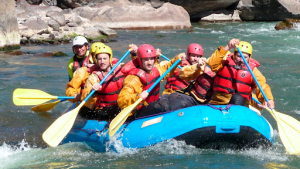
After the bike ride, the Cusco to Santa Maria section continues with white-water rafting on the Urubamba River. This is where the day shifts from beautiful to seriously fun. The river runs through a canyon with walls of rock and jungle on both sides, and the rafting section moves through a mix of calmer stretches and genuine rapids that get the heart going. You are wet, you are laughing, and you are paddling through a landscape that most people only ever see from a distance. By the time you reach Santa Maria and settle into the lodge for the night, you have already had a full adventure, and the trek has barely started.
Why the Premium Version Makes a Real Difference
There are budget versions of the Inca Jungle Trek, and then there is the premium experience, and the gap between them is noticeable after a long day outdoors. The lodges on the premium route are comfortable in a way that genuinely helps with recovery. Real beds, hot showers, and proper meals are not luxuries when you have been biking and rafting and hiking in high-altitude terrain. They are what make it possible to show up the next day feeling good instead of exhausted.
The guides on premium trips also tend to be more experienced, speak better English, and give you a richer understanding of what you are moving through. The history of the Inca road networks, the ecology of the cloud forest, and the lives of the farming communities you pass through along the way. That kind of context turns a physical adventure into something that sticks with you long after the sore legs have recovered.
Days Two and Three: Deep Into the Cloud Forest
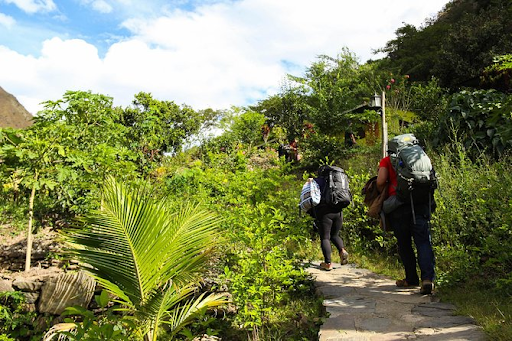
Once you are past the Santa Maria section, the trek moves into a rhythm that feels more traditional but no less interesting. The trails on days two and three wind through cloud forest and riverside paths, passing coffee farms where you can see the whole process from fruit on the branch to dried bean, and small communities where life runs at a pace that feels genuinely unhurried.
Day two also includes the option to zip-line across a canyon above the river, which is the kind of activity that sounds touristy until you are actually clipped onto the cable with the jungle spread out a hundred meters below you. It takes about ten seconds and stays with you considerably longer than that.
The hiking itself on these middle days is steady rather than brutal. You are not scrambling up steep passes or fighting through difficult terrain. The trails are well-worn, and the scenery keeps changing in a way that makes the kilometers pass easily. Rivers appear and disappear beside the path. The forest canopy opens and closes overhead. The air smells like wet earth and tropical vegetation and occasionally, when you pass through a farming plot, like fresh coffee.
Day Four: The Reason the Whole Thing Exists
Machu Picchu on day four does not disappoint. It genuinely cannot, because no matter how many photos you have seen, standing inside the citadel in person is a different experience entirely. The scale of it, the precision of the stonework, and the setting above the river canyon with mountains rising on every side all add up to something that photographs simply cannot carry.
What the Inca Jungle Premium route adds to this moment is a sense of arrival that matters. You did not just take a train and a bus. You rode a bike down a mountain, paddled through river rapids, and walked through a cloud forest for two days, and now you are here. That physical journey through the landscape surrounding Machu Picchu makes the citadel feel like a destination you earned rather than one you purchased a ticket to.
Conclusion: The Trip That Keeps Coming Back to You
The Inca Jungle Premium 4 Days / 3 Nights is not the most famous route to Machu Picchu, but it might be the most complete one. From that first exhilarating bike descent out of Cusco, through the river rapids near Santa Maria, past the cloud forest trails and zip-line crossings, and into the ancient stone city at the end, every single day adds something real to the experience.
Travel has a way of blurring together after a while. Trips start to feel similar, destinations start to overlap in your memory, and it gets harder to remember exactly what made one place different from another. This trip does not do that. The combination of biking, rafting, hiking, and finally arriving at one of the world’s great wonders on foot gives it a shape and a feeling that stays clear and specific long after you are home.
If you are going to Peru, do it the right way. Give yourself four days, get on a bike, get in a raft, walk through the jungle, and arrive at Machu Picchu with mud on your boots and a story that actually belongs to you.
