


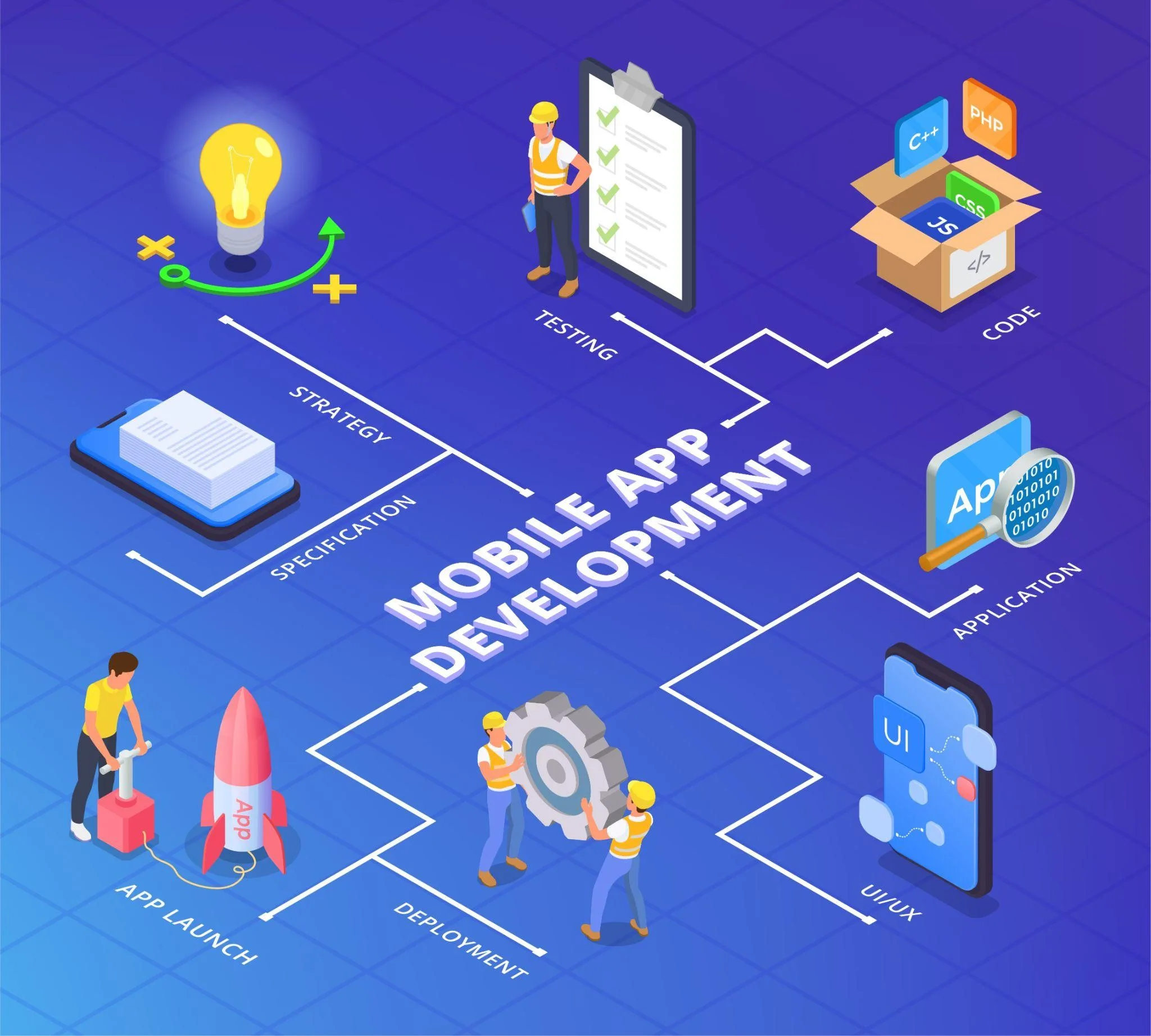
A successful mobile app is rarely the result of coding alone. Behind a reliable, useful, and engaging application is a structured process that connects business objectives, user needs, design, technology, quality assurance, deployment, and continuous improvement. Research into modern mobile development consistently identifies planning, requirements analysis, design, development, testing, deployment, and maintenance as core stages of the app lifecycle.
Contents
ToggleWhether a business is building its first application or improving an existing digital product, following these steps can reduce unnecessary rework, control project risks, and create a stronger foundation for long-term growth.
1. Start With a Clear App Idea
Every successful mobile app project begins with a clearly defined problem. Before thinking about programming languages or visual designs, businesses should determine what the application is supposed to accomplish and why customers would want to use it.
A strong concept should identify the target audience, the problem being solved, the main value offered, and the expected business outcome. For example, an app might simplify appointment booking, improve customer communication, support online purchases, or automate an internal business process.
A clearly defined purpose helps prevent unnecessary features from consuming time and resources later.
2. Research the Target Audience and Market
Understanding potential users is one of the most important early steps. Businesses should investigate what customers expect, which problems they currently experience, and what competing applications already offer.
Market and competitor research can reveal opportunities for differentiation. Instead of simply copying popular applications, development teams can identify weaknesses in existing solutions and create a better experience around speed, convenience, personalization, functionality, or customer support.
User research also helps determine which features deserve priority in the first release.
3. Define Requirements and Project Scope
Once the idea has been validated, the next step is turning it into specific requirements. This involves documenting the functions the application must provide and separating essential features from optional additions.
Requirements may include:
- User registration and authentication
- Profiles and account management
- Search and filtering
- Payments or subscriptions
- Notifications
- Messaging
- Location-based functionality
- Third-party integrations
- Administrative tools
- Analytics and reporting
Defining scope early helps establish realistic expectations for budget, resources, and delivery. It can also reduce scope creep, where new requirements continuously expand the project after development has already started.
4. Build an MVP Before Overloading the App
A Minimum Viable Product, or MVP, contains the essential functionality needed to solve the primary user problem. Instead of attempting to launch with every possible feature, teams can focus on the most valuable capabilities first.
An MVP allows businesses to test their concept with real users and collect meaningful feedback. Additional features can then be introduced based on actual demand rather than assumptions.
This approach is particularly useful for startups and businesses working with limited budgets because it allows them to validate an idea before making a larger investment.
5. Choose the Right Technology and Platform
Technology decisions can have a major impact on development speed, performance, maintenance, and scalability. Teams need to determine whether the application should be developed for iOS, Android, or both.
They should also consider whether native development or a cross-platform framework is more appropriate. The right choice depends on factors such as performance requirements, available development resources, desired user experience, device features, budget, and long-term maintenance needs.
The backend architecture, databases, APIs, cloud infrastructure, authentication methods, and third-party services should also be considered during this stage.
6. Design the User Experience Before Development
Good UI/UX design gives users a clear and intuitive path through the application. Designers typically begin with wireframes that establish screen layouts and navigation before progressing to interactive prototypes and detailed visual designs.
A prototype provides an opportunity to identify confusing navigation, unnecessary steps, and usability problems before developers spend significant time implementing them.
The design should also account for different screen sizes, accessibility considerations, touch interactions, loading states, errors, and other real-world usage conditions.
7. Develop the Application in Manageable Stages
Once requirements and designs are established, development can begin. Modern teams often divide the project into smaller iterations or sprints rather than attempting to build everything simultaneously.
Frontend development focuses on what users see and interact with, while backend development manages areas such as databases, business logic, authentication, APIs, and server-side processes.
Using version control, code reviews, automated builds, and clear development standards can make the project easier to manage and maintain. A structured approach also allows problems to be discovered earlier instead of accumulating until the end of development.
Businesses working with professional mobile app development services should ensure that development responsibilities, milestones, communication processes, and expected deliverables are clearly established from the beginning.
8. Test the App Throughout Development
Testing should not be treated as something that happens only immediately before launch. Quality assurance should be incorporated throughout the development process.
A comprehensive testing strategy can cover:
- Functional testing
- Usability testing
- Performance testing
- Security testing
- Compatibility testing
- Network-condition testing
- Device testing
- Regression testing
- User acceptance testing
Mobile applications need to work across different devices, operating-system versions, screen sizes, and network conditions. Testing helps identify crashes, broken features, slow interactions, security weaknesses, and other issues before they affect a wider audience.
9. Prepare for App Store Deployment
A completed application still needs to be properly prepared for release. This includes creating production builds, configuring backend infrastructure, preparing screenshots and descriptions, checking platform requirements, and completing the appropriate store submission processes.
Businesses should also prepare privacy information, permissions, account-management requirements, and other materials relevant to the application.
A launch checklist can help teams avoid last-minute problems and ensure that technical, marketing, and operational responsibilities are covered.
10. Monitor Performance After Launch
Launching an app is not the end of the project. It is the beginning of its real-world lifecycle.
After release, teams should monitor crashes, performance, user engagement, retention, reviews, support requests, and other relevant metrics. This information can reveal which features are working and where users are experiencing difficulties.
User feedback can be especially valuable because real-world behavior may differ from expectations established during the planning stage.
11. Continue With Maintenance and Improvements
Mobile operating systems, devices, security requirements, and user expectations continue to change. An application therefore needs ongoing maintenance to remain reliable and competitive.
Post-launch work can include bug fixes, security updates, performance improvements, compatibility updates, infrastructure maintenance, and new features. The mobile development lifecycle is best viewed as continuous rather than ending when version one reaches an app store.
Regular updates can also help businesses respond to customer feedback and changing market conditions.
12. Measure Success With Meaningful KPIs
A mobile app should have measurable objectives. Simply counting downloads may not provide a complete picture of success.
Depending on the business model, useful indicators may include:
- User retention
- Daily or monthly active users
- Conversion rates
- Purchase frequency
- Session duration
- Customer engagement
- Subscription growth
- App crashes
- Customer satisfaction
- Revenue generated through the application
Tracking the right metrics helps businesses determine whether the application is actually achieving its original objectives and where future investment should be directed.
Common Mistakes That Can Hurt an App Project
Even a promising idea can struggle when fundamental development practices are ignored. Common mistakes include starting development without clear requirements, adding too many features to the first release, overlooking security, underestimating testing, choosing technology without considering long-term needs, and failing to plan for post-launch maintenance.
Another frequent problem is poor communication between business owners, designers, developers, and testers. Clearly defined responsibilities and regular progress reviews can help keep everyone aligned.
Why a Structured Development Process Matters
The strongest mobile applications are created through collaboration between strategy, design, engineering, testing, and business teams. Each stage builds on the previous one, making early decisions particularly important.
A structured process can help businesses control scope, identify technical challenges earlier, improve user experience, and create applications that are easier to maintain and scale. Industry guidance similarly emphasizes the value of a defined lifecycle for reducing rework, improving collaboration, and preparing for technical challenges.
Conclusion
A successful mobile app development project requires much more than writing code. It begins with understanding the market and users, continues through careful planning, requirements, design, development, and testing, and extends into deployment, monitoring, maintenance, and continuous improvement.
By treating app development as an ongoing product lifecycle rather than a one-time technical project, businesses can create applications that are more useful, reliable, secure, and capable of adapting to changing customer expectations. A disciplined process also makes it easier to work effectively with professional mobile app development services and turn an initial concept into a sustainable digital product.
