


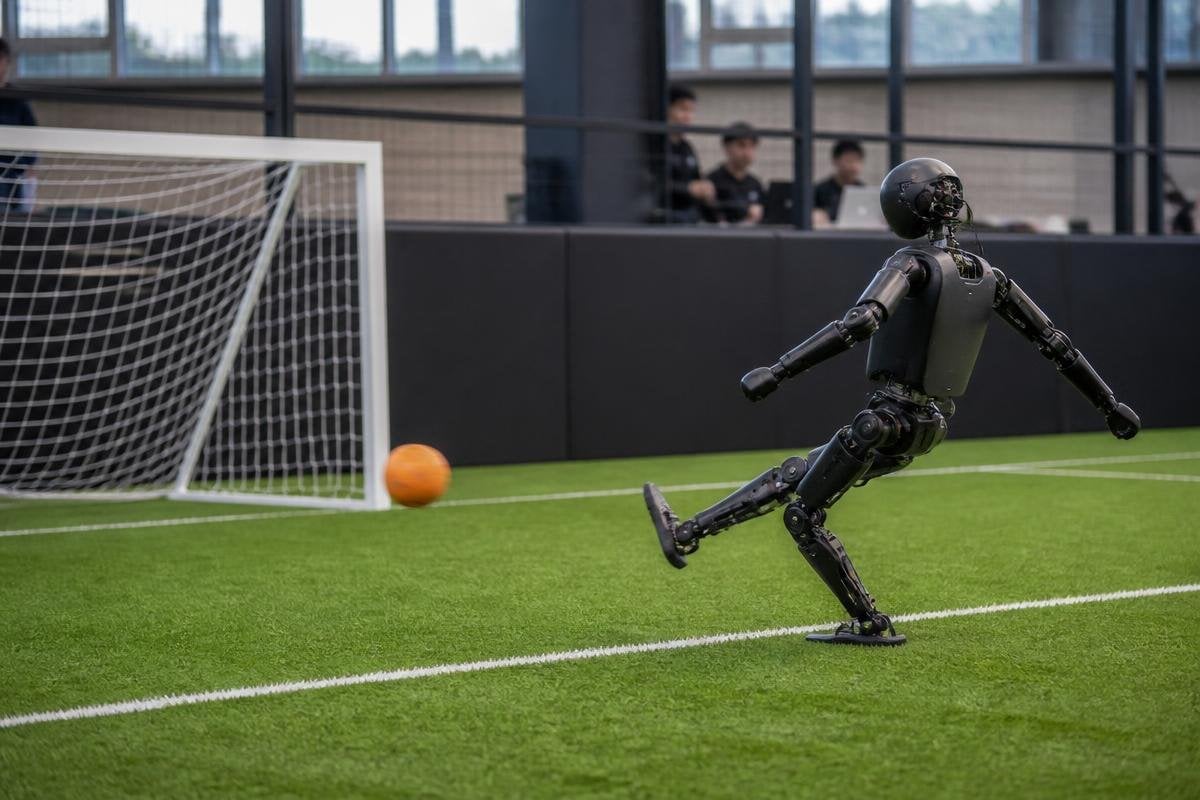
A sports robot must sense a moving target, choose an action, and control its body before the play changes. That makes sport a useful test for robotics, because a machine can fail from poor timing even when its motors and software work as planned.
Quick read
- Sport tests sensing, balance, motion, and decision-making at the same time.
- A robot that works in a fixed demo may struggle when the ball, surface, or opponent changes.
- The useful measure is repeatable play, not one successful clip.
What counts as playing a sport
A robot plays a sport when it takes part in the task rather than repeating a fixed movement. It must read conditions around it, select a response, and carry out that response with enough control to affect the result.
That can mean moving toward a ball, returning a shot, steering through a course, or working with another robot under shared rules.
The robot does not need to beat a person to prove useful progress. It needs to handle the same task again when the position, speed, or timing changes.
This is why sport gives robotics teams a clear test. The rules define the goal, the playing area limits the machine, and the result can be checked by points, time, distance, or successful passes.
The parts that make the task hard
Vision is only the start. Cameras and other sensors must locate the ball, field lines, players, or obstacles, then send that information to software that can act before the scene changes.
Movement brings a second problem. A wheeled robot can turn quickly on a smooth floor, while a legged robot must keep its balance as it steps, stops, and changes direction. Each design gives up something: wheels can lose grip, while legs use more control and more moving parts.
Contact makes the task harder again. A racket, foot, or gripper must meet an object at the right place and speed. A small timing error can send the ball wide, tip the robot, or leave it out of position for the next move.
Team sports add communication. Robots need a shared view of positions and tasks, yet that information can arrive late or conflict with what another robot sees. A plan that works in isolation may fail when several machines act at once.
Why a sports demo can mislead you
A clean demo proves that the robot completed one planned run. It does not prove that the machine can repeat the task after a bad bounce, a blocked camera, a loose surface, or an opponent’s unexpected move.
The missing detail is often recovery. Ask how the robot responds after it falls, misses the ball, loses its map, or receives a delayed command. A useful sports system needs a safe way to stop, reset, and try again without a person correcting every step.
A polished sports demo reveals only part of the engineering. Reporting on robots built for competition helps readers follow the teams, machines, and research behind these tests, including what happens after a fall or missed command.
What sports robots may teach other machines
Sports can test control in a small, repeatable setting before a robot faces less controlled work. A machine that must track a moving object and react to change shares some needs with systems that move goods, inspect spaces, or work near people.
The link has limits. A sports field has rules and boundaries, while a factory or public space may contain unknown objects, poor lighting, and people who do not act like trained opponents. A good score on the field does not prove safe operation elsewhere.
The strongest result is a record of repeated runs, clear failure cases, and the amount of human help required. Teams should report those details beside the successful plays.
A practical test checklist
Use these questions when judging a sports robot or a new demo:
- Task: Does the robot choose actions, or repeat a timed routine?
- Recovery: Can it resume after a miss, fall, or blocked sensor?
- Setting: Does it work on more than one surface or layout?
- Human help: Who starts, resets, or corrects the robot during play?
- Score: Are results measured across repeated runs rather than one clip?
- Limits: Does the team state what the robot still cannot handle?
I’d judge a sports robot by its recovery record before its fastest successful move. The next useful question is how many full games it can finish without a human stepping onto the field.
